
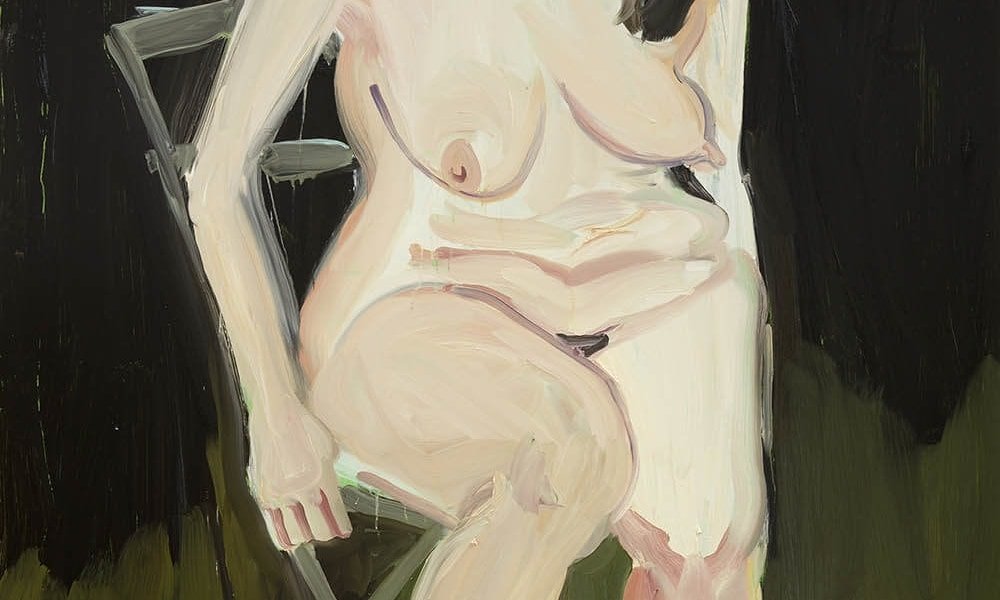
Human Condition
October 1 – November 30, 2016
In October 2016, I turned an abandoned hospital in West Adams into one of the most talked-about exhibitions in Los Angeles history. Ten years later, people still stop me to tell me where they were when they saw it.
The Los Angeles Metropolitan Medical Center had opened in 1971 as the first Black-owned hospital in the city. It operated for decades, served a community, and then collapsed — criminal mismanagement, insurance fraud, closure in 2013. By 2016, it was 40,000 square feet of peeling paint, decommissioned surgery theaters, empty maternity wards, a psychiatric floor, and a rooftop billboard that once announced the hospital's name to Western Avenue.
I saw something else. "A hospital is where life comes into the world and it's where you exit the world and die," I told Cultured Magazine at the time. "It's a building that encompasses a range of emotions, a lot of trauma, a lot of pain. I've always been fascinated by abandoned spaces and now that it's empty there's a sense of beauty there."
The building's owner, CIM Group — whose corporate art collection I oversee — donated use of the space. It was slated for demolition. Human Condition would be its last act.
THE EXHIBITION
Human Condition ran October 1 through November 30, 2016, at 2231 S. Western Ave. Over 80 artists were given the building — surgical rooms, wards, hallways, the cafeteria, the roof — and asked to make work in response to the space and the question embedded in its history: what does it mean to be human?
Walking in, you got the full weight of it before you saw a single artwork. A sink on the second floor was still stained with iodine-colored residue. Formaldehyde hung in the air. The x-ray light boxes in the corridors had been repurposed to display photographs — backlit, clinical, arresting. Bed curtains served as dividers. "You feel like you're in this very well designed home," I told W Magazine. "But then you look out and see that you're actually in an intensive care unit."
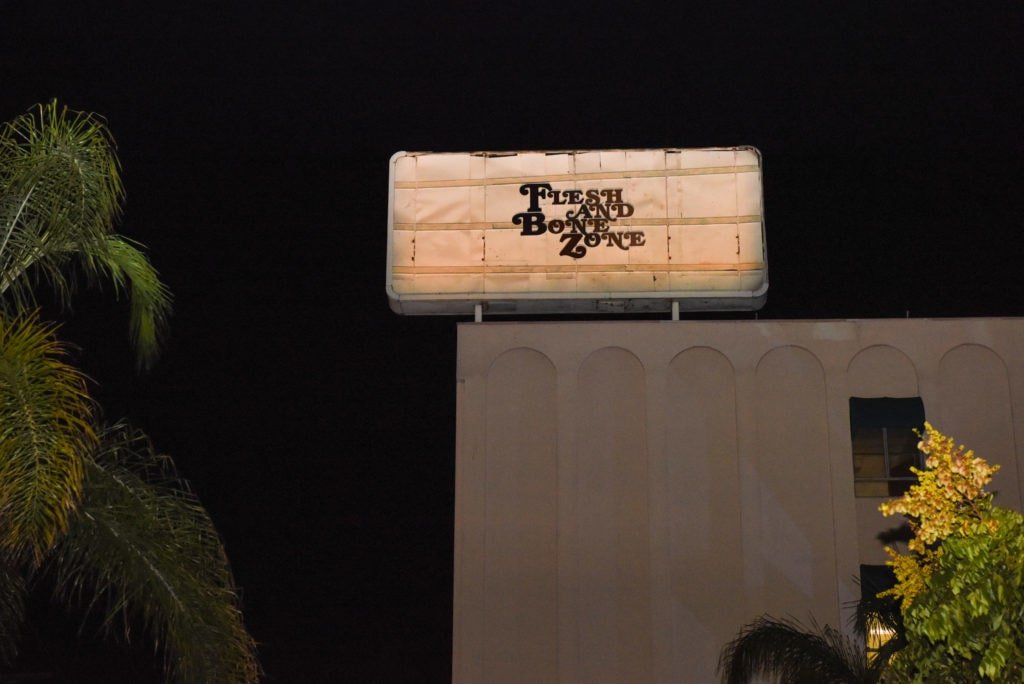
The building organized itself into a psychological architecture. The first floor addressed the subconscious: Jenny Holzer's granite bench set the tone at the entrance — a 1989 work reading "What a shock when they tell you it won't hurt..." — and works by Gregory Crewdson, David Benjamin Sherry, and Chantal Joffe moved through the corridors. Christopher Reynolds painted the cafeteria kitchen and all its cookware in Baker-Miller Pink — prison pink, the color scientifically proven to suppress both appetite and aggression. The second floor turned toward the conscious mind, with Laurent Grasso, Polly Borland, and Matthew Day Jackson occupying the wards. Daniel Arsham, Tony Matelli, and Nick van Woert filled the surgery rooms. The fourth-floor psychiatric ward was repurposed as a resting room — visitors encouraged to put their feet up among the decommissioned equipment. On the rooftop, Kelly Lamb repainted the hospital's billboard to read "Flesh and Bone Zone" — visible from Western Avenue, impossible to ignore.
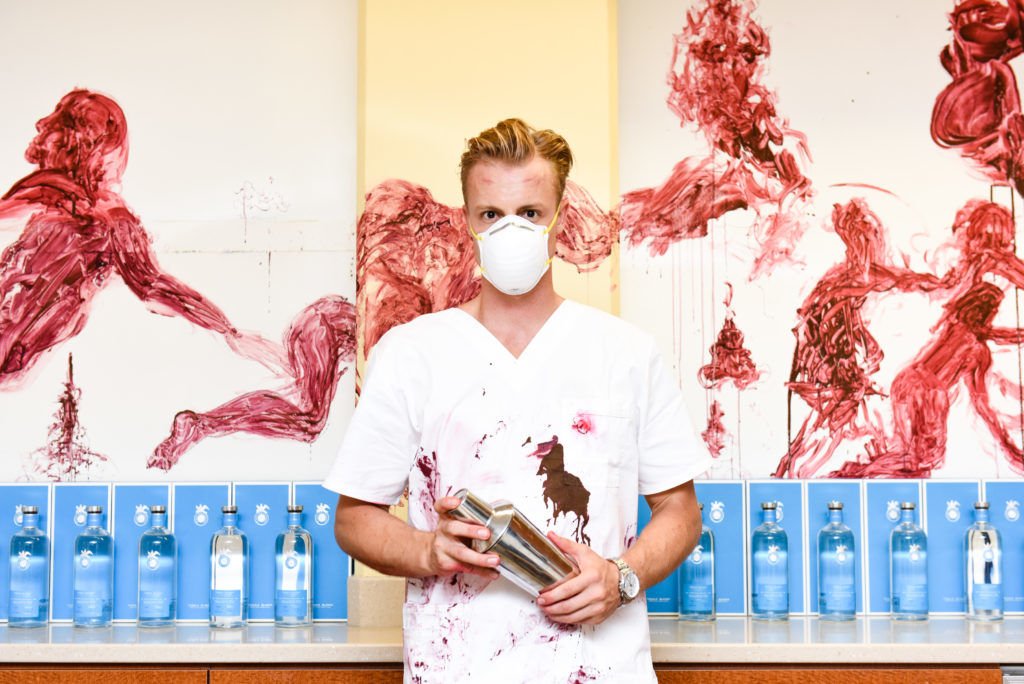
At the opening, Millie Brown performed suspended from the ceiling of the morgue. Max Hooper Schneider installed a pig blood sculpture in an operating room. Two hundred-plus individual works in a building that still smelled like what it used to be.
The hashtag was #TheHospital. It spread immediately.
WHAT I DIDN'T FULLY KNOW YET
Among the 80-plus artists were several whose careers were at their earliest inflection points. Louis Fratino showed work from his first exhibition outside of college. Nina Chanel Abney had her first group show in California. Derek Fordjour had his first show in California. Claire Tabouret as well.
I selected them because the work was right for the moment and the space. I didn't know I was documenting a generation.
Louis Fratino is now represented by Sikkema Jenkins and commands prices no one predicted in 2016. Nina Chanel Abney is collected internationally and in major museum permanent collections. Derek Fordjour is represented by Pace Gallery and his work has sold at auction for multiples of early estimates. Claire Tabouret was commissioned to design the baptistery windows for the restored Notre Dame de Paris. Her work is in the collection of Barack Obama.
I sold their work first, in that building, that fall.
THE AFTERMATH
Human Condition received more press than any exhibition in Los Angeles that year. That distinction held for several years after. It went viral before "going viral" was a standard outcome for art exhibitions — driven by the images, the space, the strangeness of encountering serious art inside a building still containing medical detritus and the residue of human crisis. Coverage ran in the New York Times, Artforum, W Magazine, ArtNews, i-D, Dazed, Monocle, Surface, Artsy, Juxtapoz, LA Weekly, and more than a dozen other publications across art, fashion, culture, and news.
The exhibition is still cited in conversations about what an independent curator can accomplish outside the institutional gallery system. It's been discussed in the context of exhibition-as-medium and curator-as-artist — the idea that the show itself, not just the work within it, is the artistic statement.
I built it because I believed in the artists and the space and the moment. That belief was its own form of intelligence. The show remains the clearest example I have of what happens when a collector's eye, a curator's instinct, and genuine conviction about what a space can hold all align at once.
—
John Wolf is an art advisor and founder of John Wolf Advisory, based in Los Angeles. He founded the firm in 2009 and serves on the council at LACMA. Human Condition (2016) was organized and produced independently at the former Los Angeles Metropolitan Medical Center, West Adams.
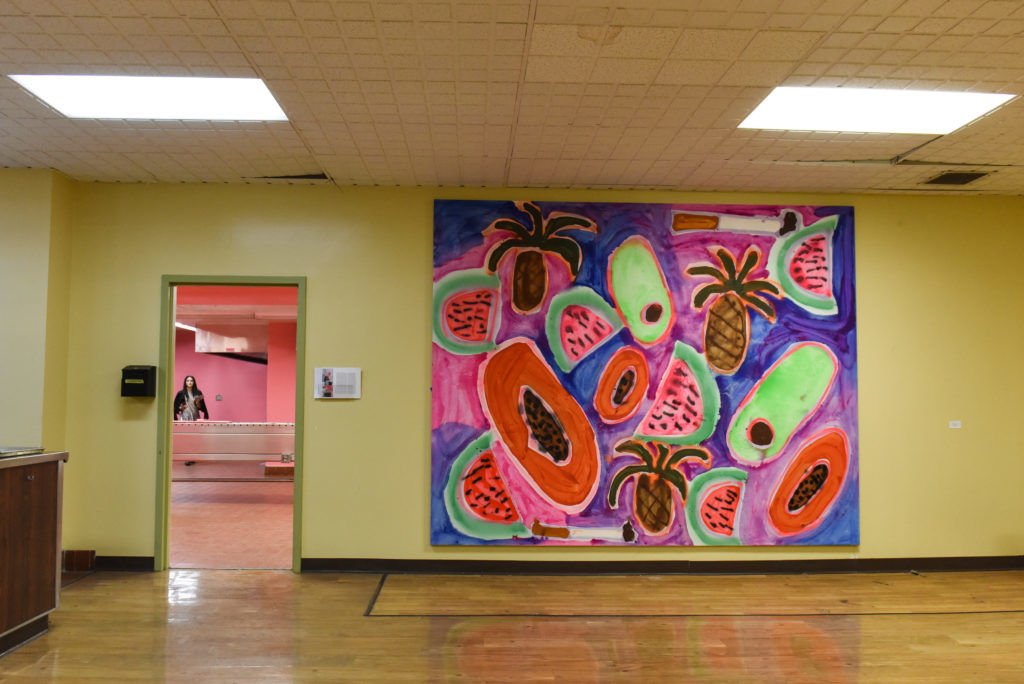
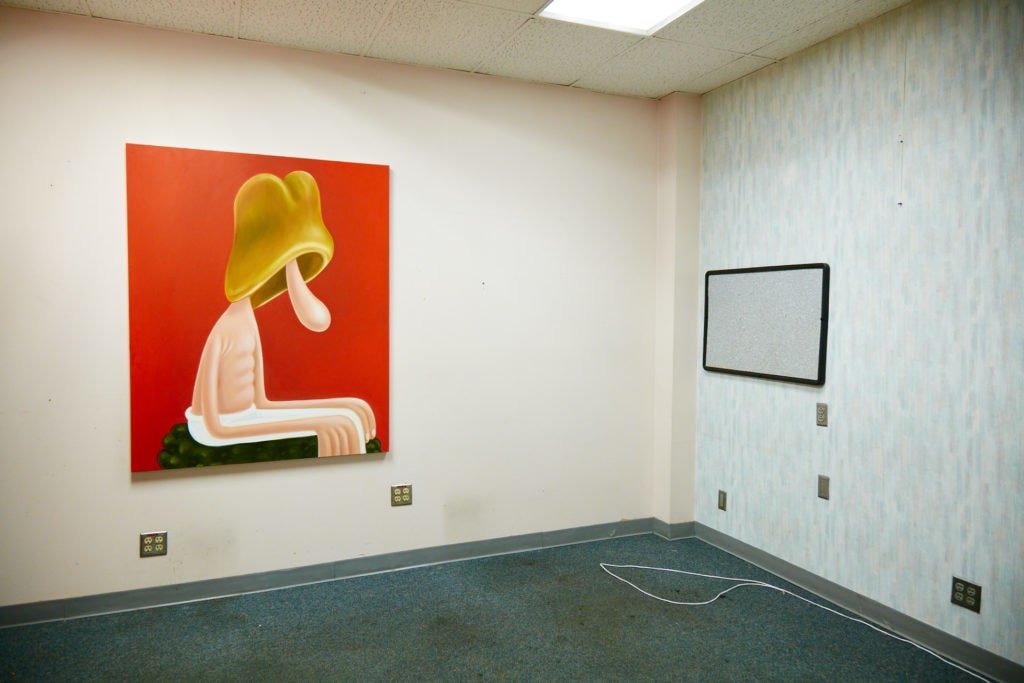
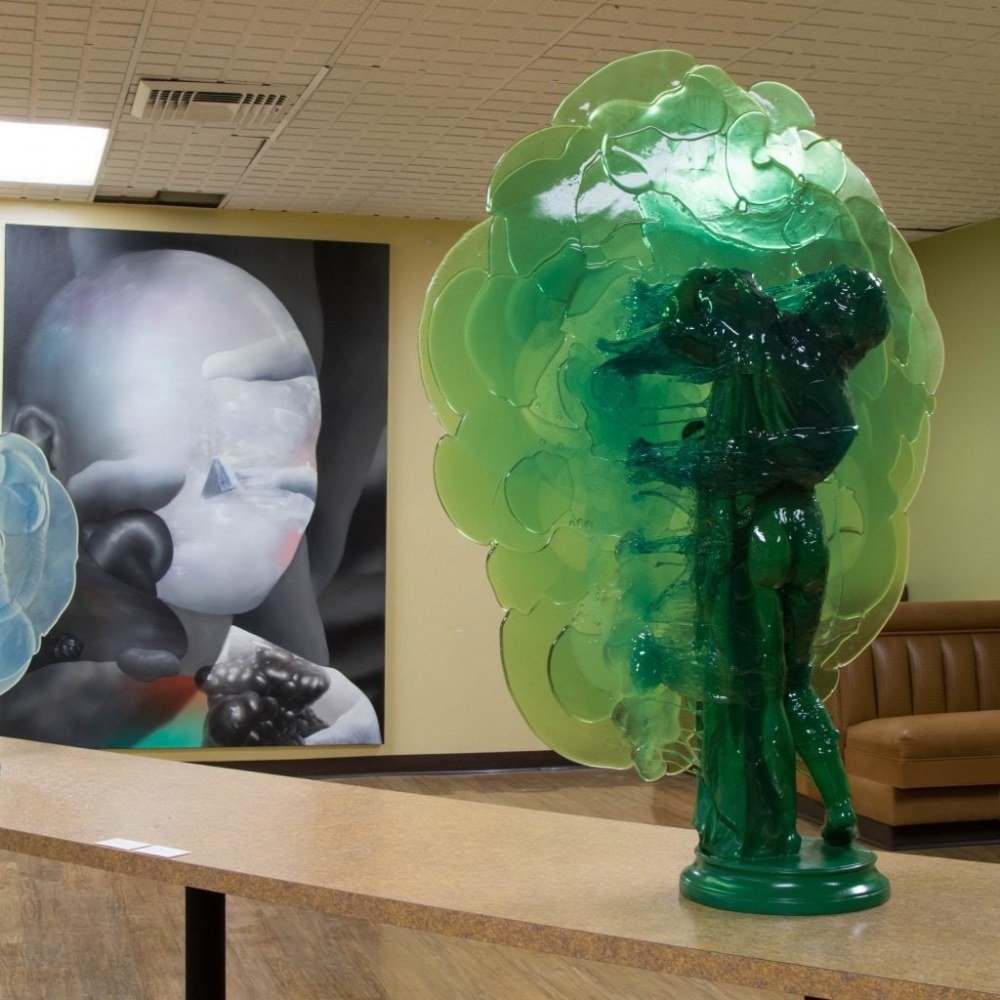
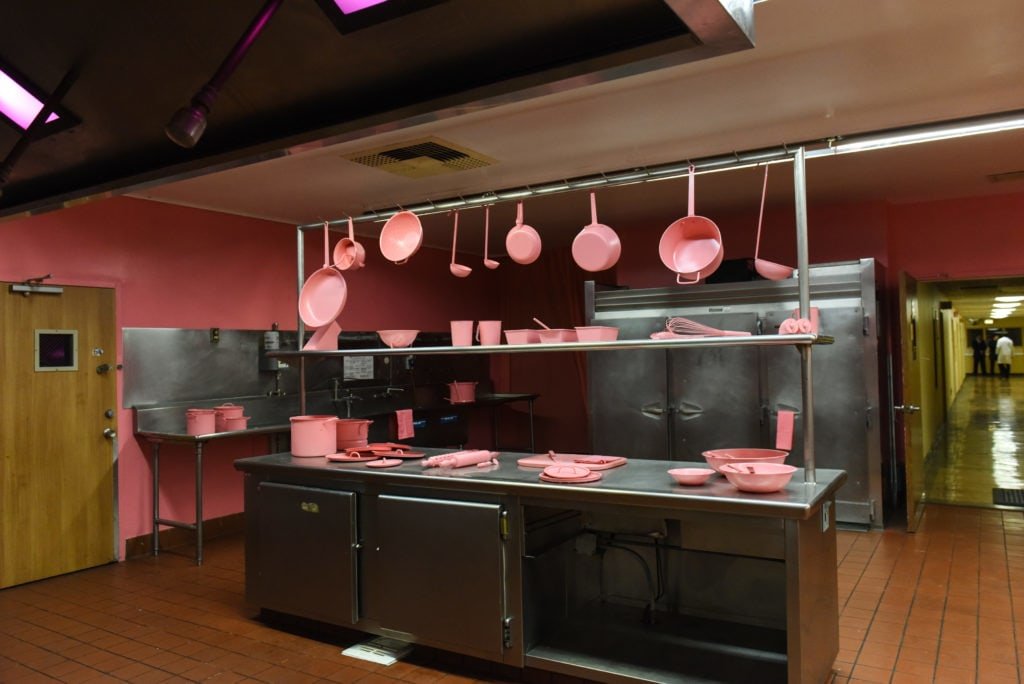
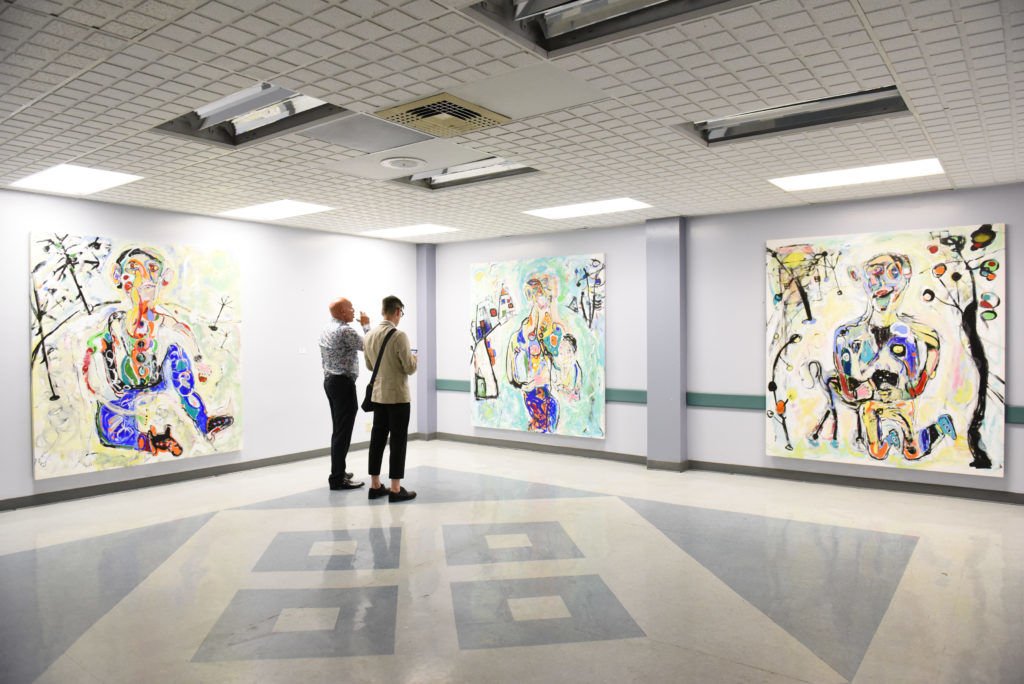
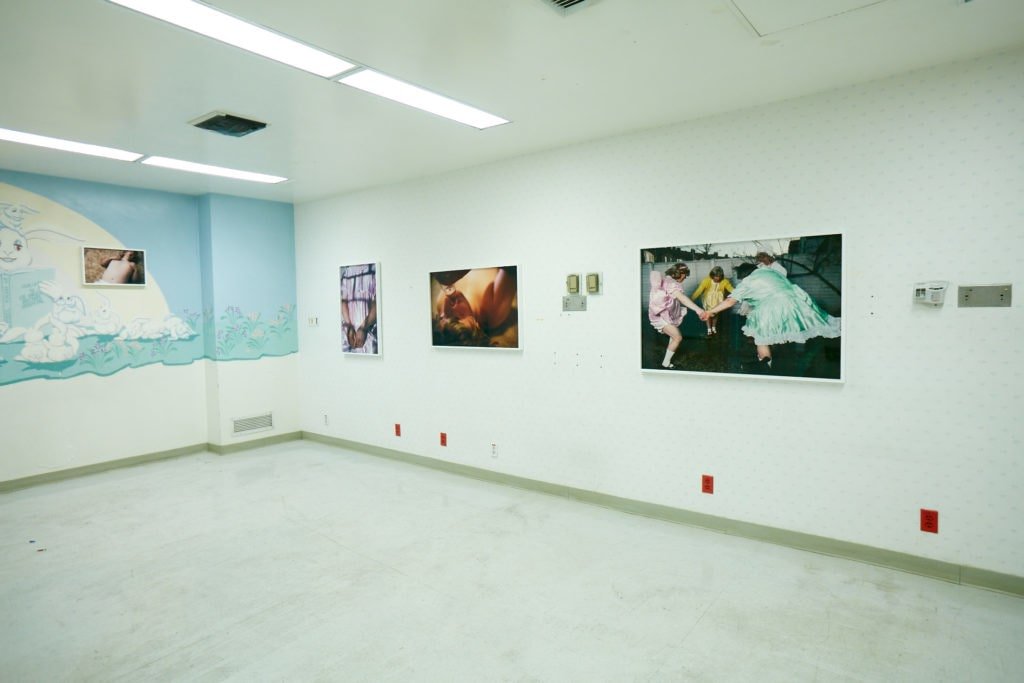
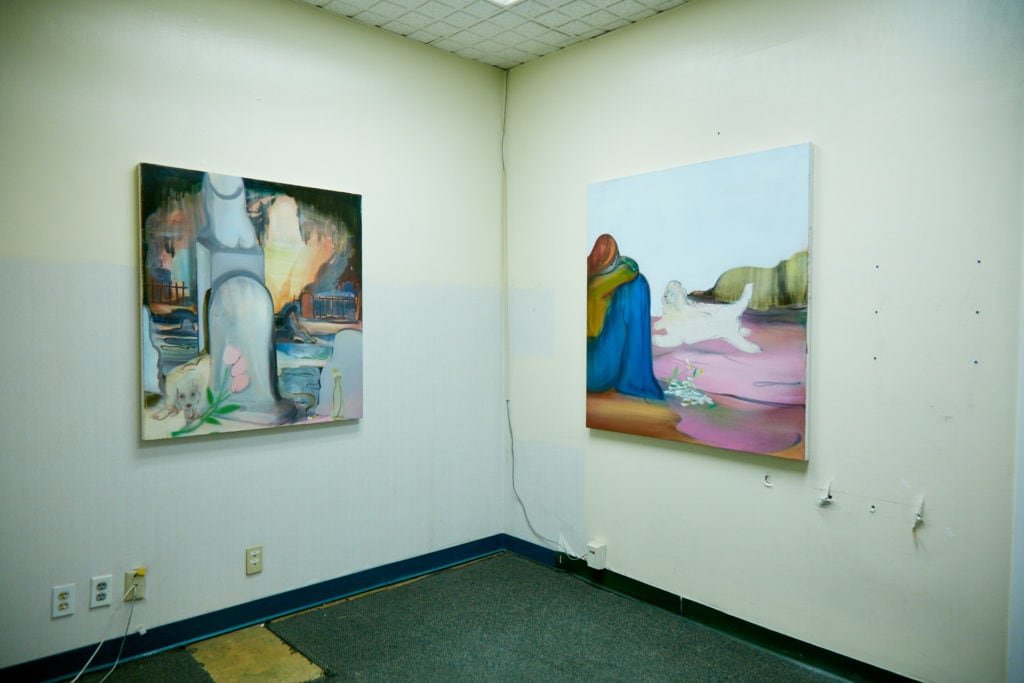
Human Condition is an immersive, site-specific exhibition that features the work of sixty emerging and established artists in a uniquely challenging space: a former hospital in West Adams, previously known as the Los Angeles Metropolitan Medical Center. Curated and produced by the Los Angeles-based art advisor John Wolf, Human Condition invites artists to re- contextualize the hospital’s functional history—over 40,000 square feet of it—as a venue to explore what it means to be human. The exhibition opens to the public on October 1, 2016 and runs through November 30, 2016.
The Los Angeles Metropolitan Medical Center proudly opened in 1971 as the first Black-owned hospital in Los Angeles. It operated successfully for decades. Later, both the hospital and the West Adams neighborhood in which it was located declined; in the hands of the Pacific Health Corp, the hospital closed amid revelations of criminal mismanagement and insurance fraud in 2013.
Years of neglect are now giving way to reinvestment in West Adams, which hosts much of the city’s cherished architectural heritage and landmarks. It is now home to many working artists, a burgeoning art scene, and other signs of community-driven cultural renewal.
With Human Condition, Wolf has invited artists to explore the corporal and psychological experience of being human. Ranging from sculpture, drawing, painting, performance, and immersive installations, the works are displayed amongst the surgical rooms, maternity wards, a psychiatric floor, and cafeteria. Both the artist and viewer are encouraged to explore the dilapidated remains and transcend the building’s original intention.
Many of the artists have taken over entire hospital rooms for solo presentations and site-specific installations, with the two main floors of the exhibition divided in approach to human condition.
The subconscious mind is addressed on the first floor by artists Jenny Holzer, David Benjamin Sherry, Gregory Crewdson, and Chantal Joffe, among others. The hospital’s rooftop billboard, which once read “The Los Angeles Metropolitan Medical Center,” now reads “Flesh and Bone Zone” in a gradient of flesh colors—the work of artist Kelly Lamb. Upon entry, Jenny Holzer’s engraved white granite bench “What a show when they tell you it won’t hurt...,” 1989, succinctly sets the tone for psychological tour de force ahead.
The conscious, decision-making mind is explored on the second floor by Laurent Grasso, Polly Borland, Matthew Day Jackson, and Marc Horowitz, to name a few. Here, the surgery rooms host sculptural work by Daniel Arsham, Matthew Day Jackson, Tony Matelli, and Nick van Woert, while Polly Borland’s “Babies” series hangs in the cheerful pediatric ward. The juxtapositions range from uncanny to twisted. Before climbing to the fourth floor psychiatric ward, guests are invited to put up their feet: In an ironic nod to a human need for comfort, the otherwise sterile ICU has been repurposed as a waiting room with furniture from the Haas Brothers, Jeff Zimmerman, James Magni, Kerry Joyce, and Holly Hunt.
Human Condition is a unique opportunity to experience artwork outside the confines of a typical art space. In using the skeletal remains of the hospital and its discarded medical supplies, artists and viewers are encouraged to explore the notion of what we leave behind—from objects to human history.
Artists in the exhibition:
Nina Chanel Abney, Daniel Arsham, Gintare Bandinskaite, Tanya Batura, Katherine Bernhardt, Louise Bonnet, Polly Borland, Delia Brown, Kendell Carter, Ross Chisholm, Larry Clark, Greg Colson, Chris Cran, Gregory Crewdson, Zoe Crosher, Mira Dancy, Marc Dennis, Marlene Dumas, Celeste Dupuy-Spencer, Nicole Eisenman, Amir H. Fallah, Louis Fratino, Derek Fordjour, Danny Fox, Louisa Gagliardi, Anna Glantz, Brendan Getz, Laurent Grasso, Heidi Hahn, Michael Haight, Brian Harte, Katie Herzog, Jenny Holzer, Marc Horowitz, Ridley Howard, Bettina Hubby, Leonhard Hurzlmeier, Matthew Day Jackson, Joshua Jefferson, Chantal Joffe, Jordan Kasey, Hoda Kashiha, Owen Kydd, Shay Kun, Friedrich Kunath, Kelly Lamb, Jonathan Lux, Tala Madani, Robert Mapplethorpe, Daniel Joseph Martinez, Max Maslansky, Tony Matelli, Simon Mathers, Patrick McElnea, John Millei, Marilyn Minter, Theo Mercier, Joshua Nathanson, Vernon Price, Tal R, Christopher Reynolds, Holly Rockwell, Alexander Ruthner, Lionel Sabatte, Stuart Sandford, Yves Scherer, Max Hooper Schneider, David Benjamin Sherry, Kim Simonsson, Peter Stichbury, Claire Tabouret, Johan Tahon, Mateo Tannatt, Kenneth Tam, Ed Templeton, Kristian Toubourg, Nick van Woert, Mark Verabioff, Matt Wedel, Jessica Williams, Bradley Wood, and Alexander Yulish.
Special thanks to ANC Productions for the extraordinary lighting design and ArtMovement for transportation and installation
Human Condition curated by John Wolf 2231 S Western Ave
Los Angeles, CA 90018
Opening Reception: October 1, 2016 October 1 – November 30, 2016
